Design Studio
 Approach:
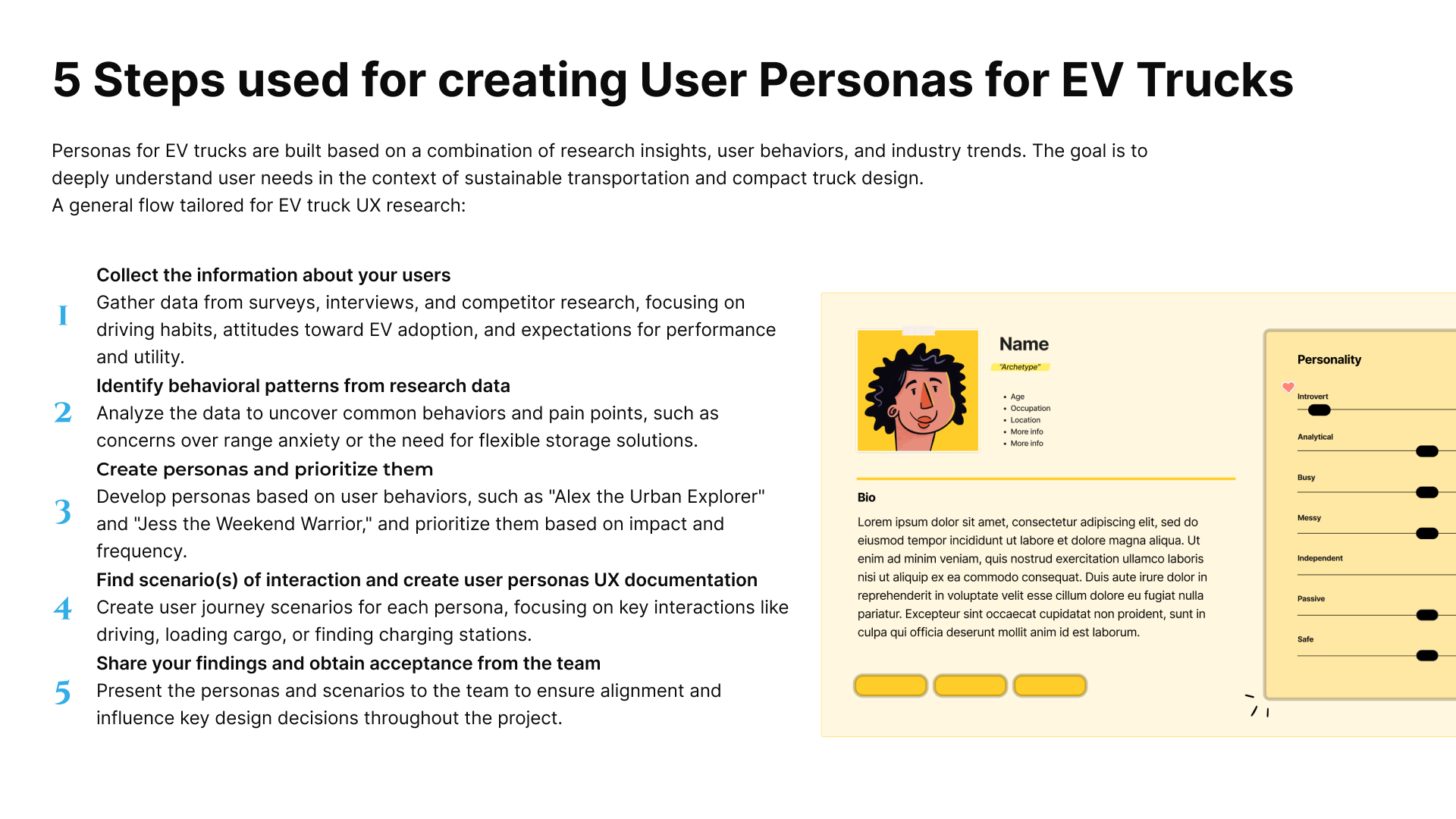
User Research & Persona Development:
Conducted surveys and interviews with potential users, including urban dwellers, tradespeople, and outdoor enthusiasts.
Developed key personas representing different user needs, such as “The City Commuter,” “The Weekend Explorer,” and “The Small Business Owner.”
Usability Testing & HMI Evaluation:
Analyzed existing vehicle interfaces and tested prototype infotainment systems to improve ease of use.
Focused on simplifying EV-specific interactions, such as charge management and regenerative braking settings.
Competitor Benchmarking:
Studied current compact and full-size EV trucks to identify best practices and gaps in user experience.
Evaluated features like range indicators, towing assistance, and smart storage solutions.
Interior & Space Optimization Studies:
Conducted ergonomic testing to ensure comfortable seating and intuitive cabin layout.
Explored modular storage solutions to enhance versatility for work and recreation.
Range & Charging Behavior Analysis:
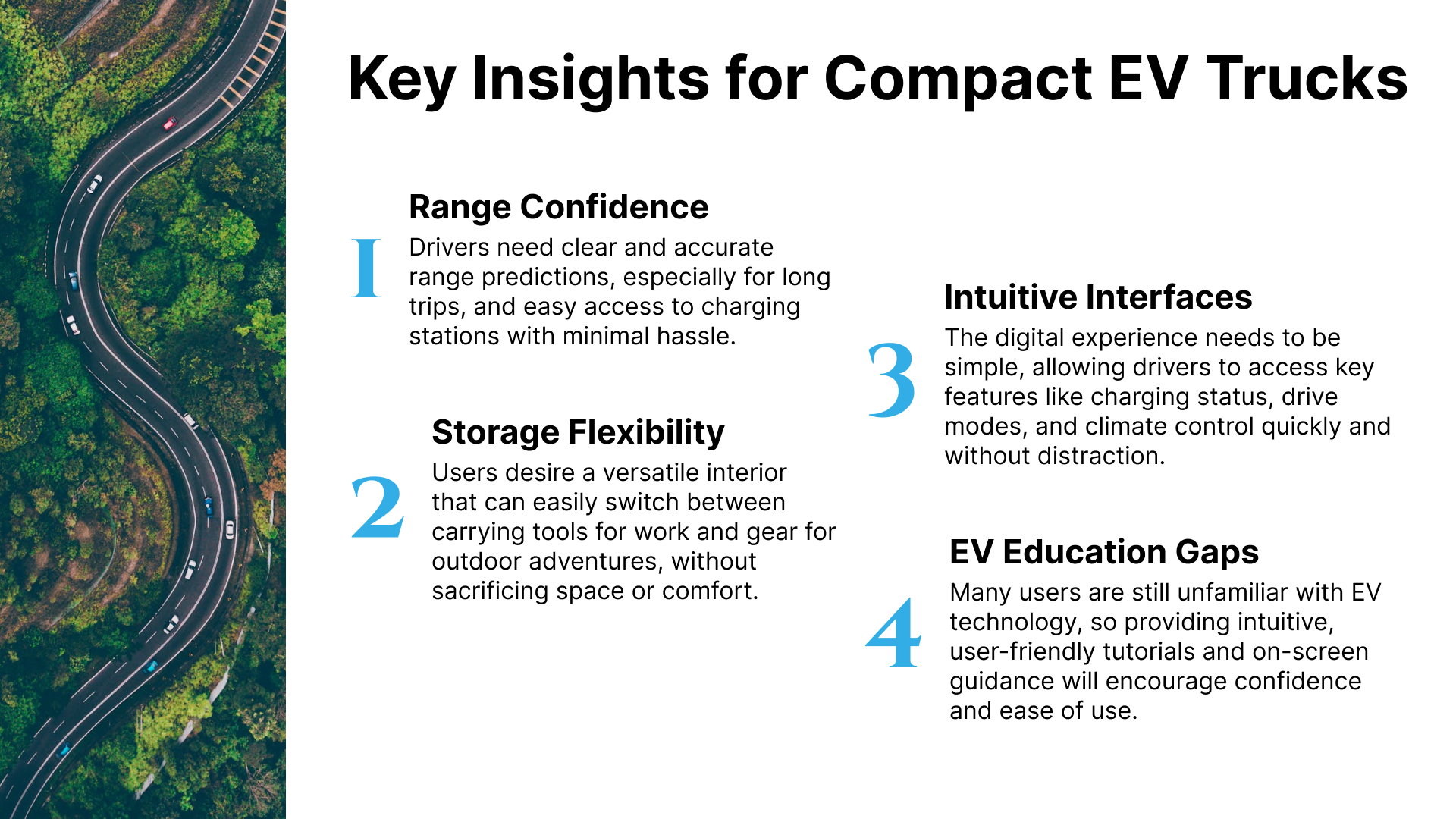
Examined user behaviors related to charging frequency, preferred locations, and concerns about range anxiety.
Suggested improvements in charging UI/UX, such as predictive range estimations based on driving habits.
Prototyping & Iteration:
Created interactive wireframes and tested them with potential users to refine dashboard layouts and digital interfaces.
Iterated on feedback to improve the overall intuitive design and functionality.
Outcome: The research provided key insights that helped inform design decisions, leading to:
A more user-friendly HMI, reducing the learning curve for first-time EV owners.
Enhanced interior usability, optimizing space for both daily use and cargo needs.
Better communication of range and charging information, reducing user anxiety.
Innovative storage and modular features, making the compact EV truck more practical for various users.
Overall, our UX research paved the way for a well-informed, user-centered approach to compact electric truck design, ensuring the final product meets the expectations of modern drivers while embracing the future of EV transportation.